Ten Out of Ten, Trouble Ahead: Strictly’s Week-One Frontrunner Trap — and the 2026 Couple Already Feeling the Draft
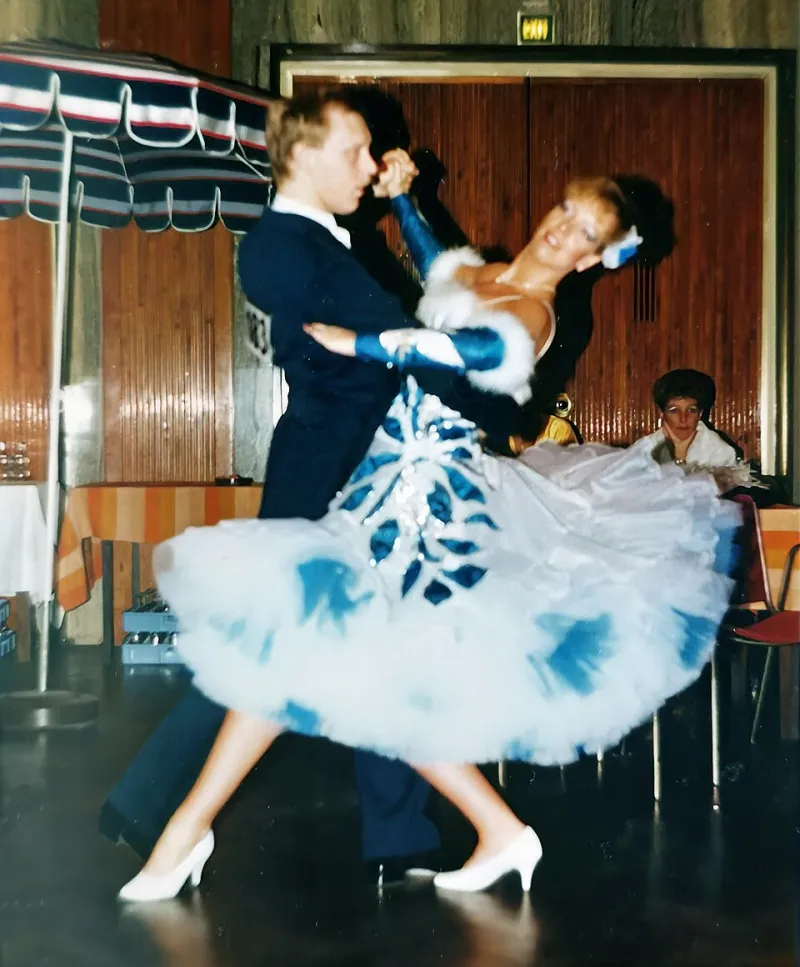
Photo: Yolanl, CC BY 4.0, via Wikimedia Commons
Every Strictly series begins with the same delicious lie: the leaderboard means something. It does, briefly. Then the public vote arrives, the group chats get involved, and the couple who sparkled in week one discover that being top of the pile is less a crown and more a flashing neon sign reading please take this one down a peg.
That is the strange maths of the earliest tens. A perfect paddle in September — or, in 2026’s case, a first-week routine that had Shirley reaching for the ten before the fake tan had properly dried — feels like proof of quality. In voting terms, it can be proof of something else entirely: that you have peaked too soon, that you are the judges’ favourite, that you are somehow too good to be trusted.
The sugar rush of an early ten
Strictly loves a journey. It says so every year, usually while Anton is pretending not to well up. The show’s emotional grammar is built around improvement: the nervous week-one waltz, the mid-series breakthrough, the final-week triumph. A couple who arrive fully formed disrupt that story. They are not climbing the mountain; they are already at the summit, sipping a cocktail and asking why everyone else is puffing.
That is why the first ten is such a dangerous score. It sets a baseline the couple can only fall from. Craig’s paddle is not just a number; it is a narrative device. Give it out early and you have written a headline before the public has had a chance to fall in love. The couple then have to spend the next three months proving they are not smug, not over-choreographed, not the teacher’s pet. It is exhausting just typing it.
History is littered with couples who learned this the hard way. Ashley Roberts and Pasha Kovalev were dazzling from the off in 2018 and still found themselves in dance-offs. Maisie Smith and Gorka Márquez were landing judges’ praise in 2020 and then landed in the bottom two. Alexandra Burke and Gorka in 2017 were scoring like a finalist before the public had fully bought the journey. None of them were bad. That was sort of the problem.
The backlash is not about talent
Let’s be clear: the voting public does not punish competence. It punishes the feeling of inevitability. There is a difference between a couple who are brilliant and a couple who have been anointed. The first is exciting. The second makes people want to check what else is on. Strictly fans are loyal, but they are also deeply suspicious of a foregone conclusion. We like to feel we have discovered something, not been handed a memo.
The edit does not help. A training VT that leans too hard on how many hours they have put in can read as worthy rather than warm. A judges’ standing ovation in week two can feel like overkill. A couple who keep smiling through every critique can start to look robotic. None of this is fair, and all of it is real. The earliest tens create a spotlight so bright that every flicker of personality gets magnified — or missed entirely.
And then there is the running order. The couple who close the show in week one often open it a few weeks later, or get shoved into the death slot just before the results. The producers are not being cruel; they are chasing drama. But the effect is a temperature drop. The frontrunner goes from being the story to being the background music while someone else gets the breakthrough edit.
The 2026 couple in the crosshairs
Which brings us to Nell Harper and Kai Widdrington. Yes, they topped the first leaderboard. Yes, the routine was gorgeous — all floaty arms and a lift that should have required a risk assessment. Yes, the group chats have already decided they are the ones to beat. That is precisely why they should be nervous.
Nell has the kind of natural musicality that makes Strictly producers purr. Kai is a pro who knows how to frame a partner and when to step back. Together they look suspiciously ready. Too ready, perhaps. The danger is not that they will suddenly forget how to dance. It is that the public will decide they have already seen the best of them. Once that label sticks — peaked in week one — it is very hard to peel off. It becomes the lens through which every subsequent routine is viewed. A 9 becomes a disappointment. A 10 becomes expected. A stumble becomes proof that the judges were wrong all along.
Nell and Kai need to mess things up a bit. Not in a chaotic way, obviously. We are not suggesting a rogue cape or a forgotten foxtrot. But they need to show us the graft. A routine that is slightly too ambitious and wobbles before they save it will do more for their vote than another clean, clinical triumph. Strictly voters love a recovery. They love a couple who look genuinely relieved to have got through it. They love a human being, not a hologram.
How to dodge the peaked-in-week-one narrative
The first rule is to stop chasing the ten. If Craig does not reach for the paddle for a fortnight, good. It gives Nell and Kai somewhere to go. The second rule is to let the training VT do some heavy lifting. Show the argument about the timing. Show Kai’s face when Nell nails the pivot for the first time. Show the moment it stops being a performance and starts being a partnership. The audience needs a reason to root for them that is not just they are good at dancing.
The third rule is to handle the Clauditorium like a human. A joke, a self-deprecating comment, a genuine gasp when the scores come in — these things matter. The couple who look like they are enjoying themselves are much harder to resent than the couple who look like they are waiting for their GCSE results.
And the fourth rule? Do not read the betting odds. The 2026 frontrunner tag is a sticky thing, but it is not a life sentence. Kelvin Fletcher and Oti Mabuse topped week one in 2019 and went on to win the whole thing, so the curse is not absolute. The difference was that Kelvin never looked like he expected to be there. He looked delighted, slightly baffled, and absolutely up for the ride. That is the energy Nell and Kai need now: less we are the winners, more we cannot believe we get to do this.
The verdict
The first ten is not a guarantee of anything except attention. It buys you a headline and a target. For Nell Harper and Kai Widdrington, the next few weeks are about turning that target into a story people want to follow. If they can do that — if they can look vulnerable, take a lower score with good grace, and let us see the effort behind the polish — they might just survive the trap that has swallowed so many early frontrunners before them.
If they cannot, the public will do what the public always does when it smells a coronation: reach for the phone and vote for someone else. That is the real curse of the week-one leader. Not the judges’ scores. The audience’s attention. And once it drifts, it is very hard to get back.